Hometown Hero’s Hardware: Hack Wilson

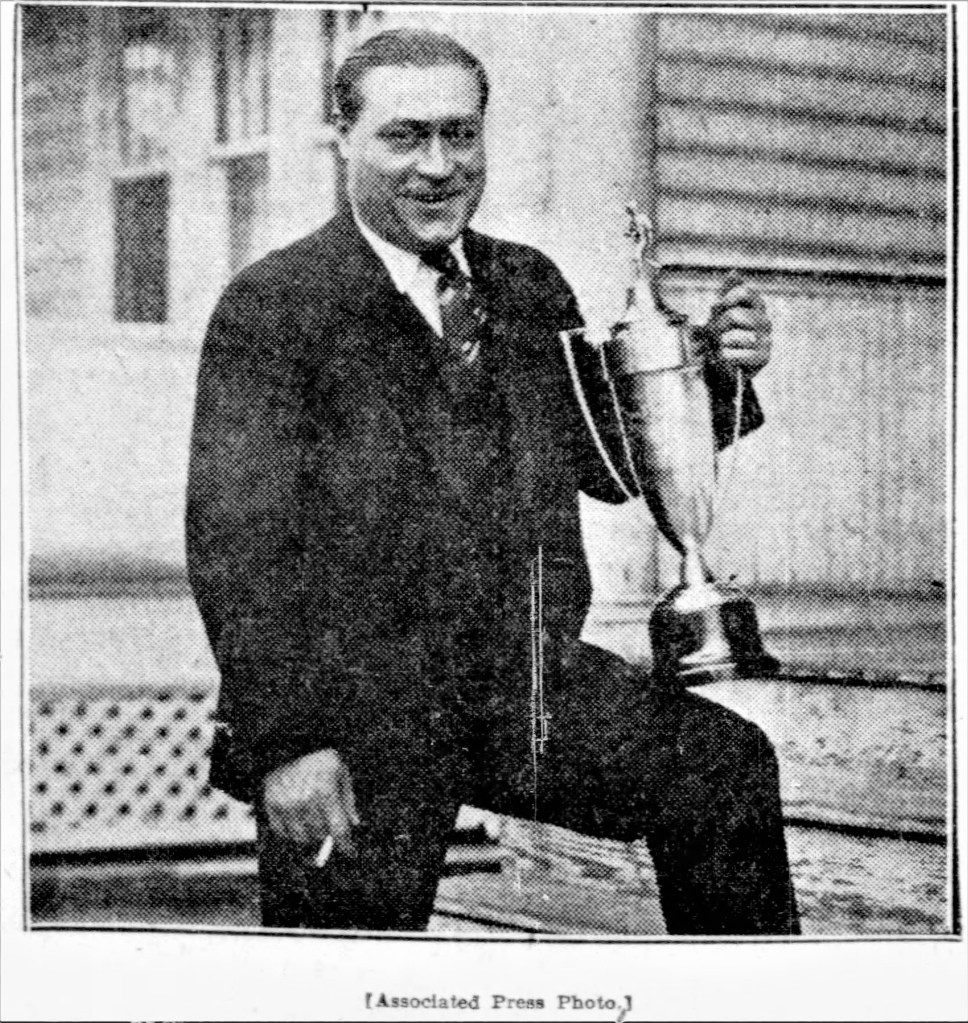
On November 13, 1930 the Martinsburg, WV police department escorted Hack Wilson, several civic leaders, and a pair of marching bands from Wilson’s home on John Street to the town square, where thousands had gathered to celebrate the home run hero. Local luminaries, including Mayor Chris Dailey, spoke at a grand ceremony that culminated in the presentation of a “handsome silver loving cup, suitably engraved” to Wilson. Photographers from World Wide Photo and the Associated Press snapped pictures of Wilson posing proudly with the trophy in front of his home.
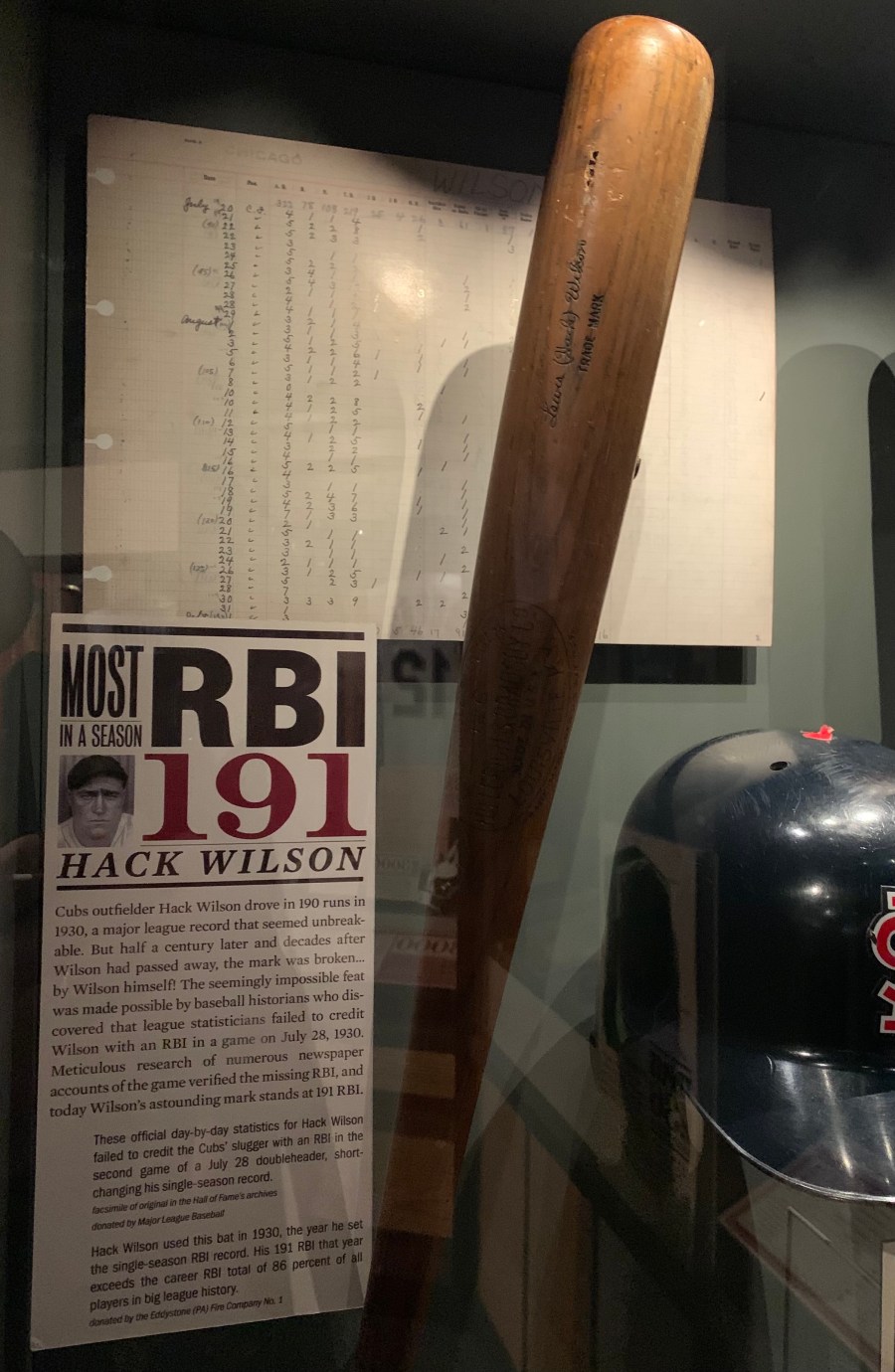
Hack Wilson’s 1930 season for the Cubs was one for the ages. Wilson set the National League record with 56 home runs, only the second player besides Babe Ruth to have eclipsed fifty in a season at the time. He slashed .356/.454/.723. (In fact, his 1.177 OPS is still a Cubs’ team record.) Wilson’s 1930 season, however, is probably best remembered for those 191 RBIs, a record that stands today—and may never be broken.

After Wilson’s Cubs teammate Rogers Hornsby was voted National League MVP in 1929, the league abandoned the custom (and the accompanying $1000 reward). The Baseball Writers’ Association of America conducted an informal MVP vote following the 1930 season and Wilson was the top vote-getter, topping Cardinals’ infielder Frankie Frisch by six votes. However, this putative MVP Award has never been officially recognized by baseball. Accordingly, a loving cup presented by some admiring locals wound up being the most enduring hardware commemorating Wilson’s incredible season. But what ever became of that handsome trophy?

Well, it turns out the award survived and is archived at the National Baseball Hall of Fame and Museum in Cooperstown. The cup has tarnished and sustained some damage, including the loss of the ballplayer that appeared to have adorned the top.
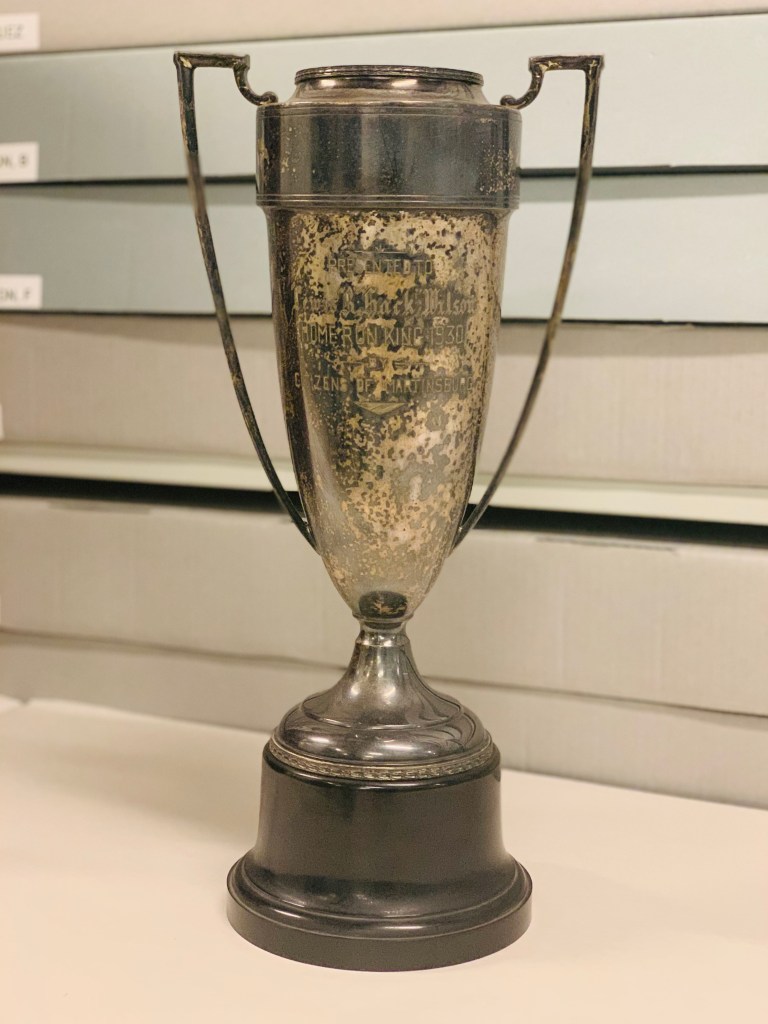
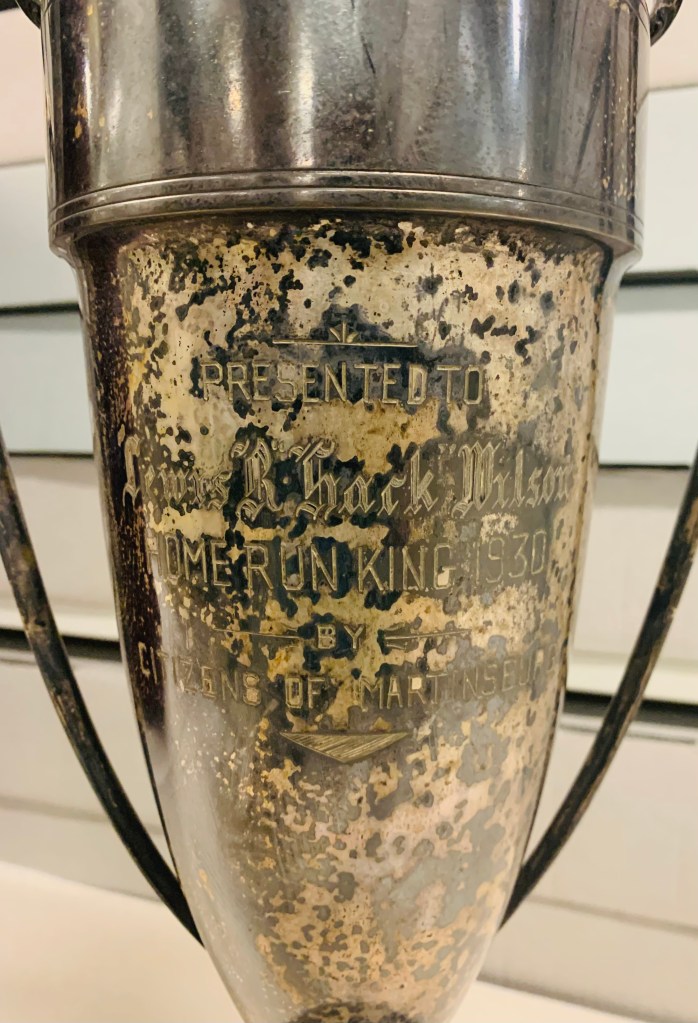
The engraving is still legible, however:

PRESENTED TO

Lewis R. “Hack” Wilson

HOME RUN KING 1930

By

Citizens of Martinsburg

Author holding Hack’s trophy. Photo credit: Bill Pearch

A loving cup, indeed.

Notes:

Very special thanks to Tom Shieber for allowing the author to see and hold the subject loving cup and Jason Schwartz for arranging the viewing with Tom in advance.

Sources:

“1930 Home Run King is Voted ‘Most Valuable’,” Messenger-Inquirer (Owensboro, Kentucky), October 8, 1930. (The Cubs agreed to pay Wilson $1000 prize that had previously accompanied the award.)

“Martinsburg Does ‘Whalen’ for Hack,” Evening Sun (Hanover, Pennsylvania), November 14, 1930.

“Cubs’ Home Run King Greeted in Home Town,” Chicago Tribune, November 17, 1930.

“Home Run King Who Succeeded Ruth Poses with His Family and Trophy,” Portland (Maine) Press Herald, November 17, 1930.
Stan Hack: A Pilot’s Pilot

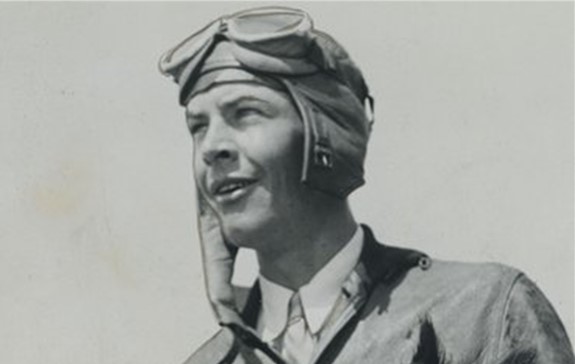
Long before Stan Hack was named Cubs pilot in 1954, “Smiling Stan” was literally an airplane pilot, quite possibly the first player ever to fly himself to spring training.

Born and raised in Sacramento, Hack’s first professional experience came with his hometown Pacific Coast League Sacramento Senators in 1931. He appeared in 164 games for the Senators, where he hit .352, legged out 13 triples, and racked up 300 total bases. Following the season, the Cubs purchased Hack from Sacramento for the hefty sum of $40,000 (nearly $750,000 today).

Hack appeared in 72 games for the 1932 Cubs and slashed .236/.306/.365, with two home runs and five stolen bases. He had a single appearance in the 1932 World Series as a pinch runner for Gabby Hartnett, who had reached on an error in Game Four.

Almost immediately after the World Series ended, Hack began taking flying lessons in Sacramento and was granted his pilot’s license in January 1933. Using his World Series bonus share, Hack purchased a 225-horsepower Stearman biplane for $4400 and announced he would be flying himself from Sacramento to the Cubs training camp at Catalina Island, located 22 miles off the coast of southern California.  

Chicago Tribune, February 19, 1933

On February 19, Hack and two passengers escaped injury as Hack was attempting to land his airplane at Sacramento’s municipal airport. Witnesses reported seeing Hack approach at an excessive speed when his plane suddenly swerved and tipped over onto its wing, causing extensive damage. Despite the accident, Hack announced his intent to repair the craft immediately and fly it to Catalina.

Hack had invited Cubs outfielder Frank Demaree, a fellow Sacramentan, to fly with him to Catalina Island, but Demaree declined. Demaree quipped, “they couldn’t give me an airship, much less sell me one. I have yet to take my first ride in an airplane.” (Perhaps news of the crash landing influenced his decision?)

Following spring training, Hack’s flying instructor, Kenneth Kleaver, was hired to fly the plane to Chicago so Hack would have it available just “to ride around in.”

Hack began the 1933 season on the Cubs roster but was used sparingly by player-manager Charlie Grimm, appearing in just three April games as a pinch runner. He was demoted to the Albany Senators of the International League on May 3, sent along with outfielder Vince Barton.

Hack hit .299 in 137 games for Albany and was recalled to the Cubs once the Senators’ season ended. Irving Vaughn of the Chicago Tribune, however, was not impressed, “the .300 mark. . .isn’t much for the International League.”

Hack flew himself back to Chicago, along with his terrier Splinters, to re-join the Cubs. This photo appeared in the (Minneapolis) Star Tribune on September 10, 1933.

Stan Hack and his dog, Splinters
Backside of photo, including clipped caption

Back in Chicago, Hack worked his way into the lineup as the 1933 campaign closed and ended up holding onto the Cubs’ starting third base job for the next decade. Hack soared in his career as he recorded 2193 hits, posted a career slash line of .301/.394/.397, was a five-time All-Star, and garnered MVP votes in eight different seasons. His lifetime bWAR of 55.5 ranks 15th overall for third basemen.

Following his final Major League season in 1947, Hack was named manager for the Cubs’ farm team in Des Moines. He worked his way up through the minor leagues and was named Cubs skipper for the 1954 season. It is unknown whether Hack flew himself to Chicago to pilot the Cubs.    

Notes:

Stan Hack appeared in 17 World Series games after 1932 and slashed .348/.408/.449/.857 across 1935 (L-DET), 1938 (L-NYY) and 1945 (L-DET).

Sources:

  • http://www.baseball-reference.com
  • “Hack to Fly Own Ship to Cub Camp,” Evening Star (Washington, DC), February 4, 1933: 17.
  • “Flying to Coast,” Brooklyn Daily Eagle, February 12, 1933: 40.
  • “Aviator Hack to Drop in On Cubs at Catalina Isle,” Chicago Tribune, February 19, 1933: 22.
  • “Stanley Hack Makes ‘Hook Slide’ in Own Airplane; Escapes Injury,” Sacramento Bee, February 20, 1933: 12.
  • “Cubs Send Vince Barton, Stanley Hack to Minors,” Morning News (Wilmington, Delaware), May 4, 1933: 12.
  • Irving Vaughn, “Rain Again Puts Doubleheader on Cub Program,” Chicago Tribune, August 29, 1933: 19.
  • “Hack Flies Back to Cubs,” Star Tribune (Minneapolis, Minnesota), September 10, 1933: 17.